
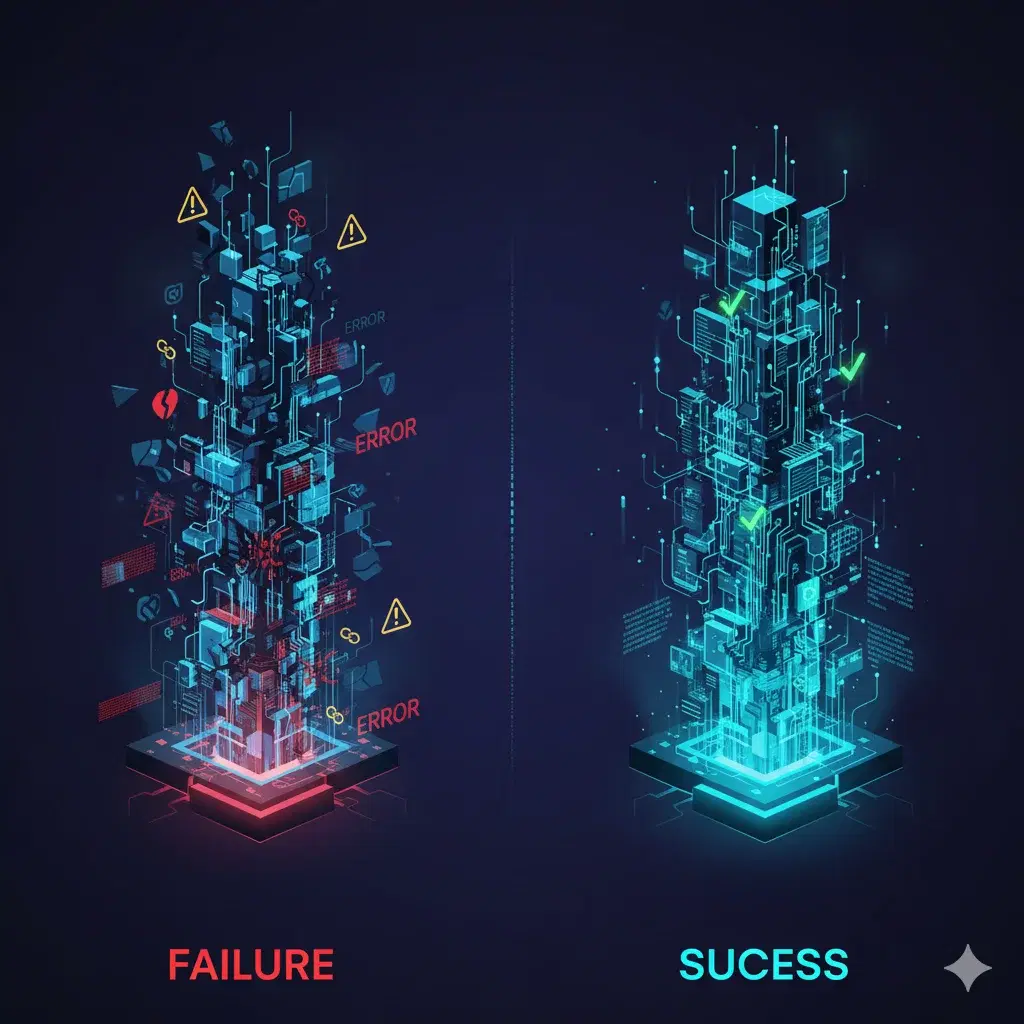
In 2026, software is central to business growth, operational efficiency, automation, and customer experience. Companies invest heavily in new systems expecting measurable improvements. Yet despite budgets, talent, and planning, many software projects underperform, exceed timelines, go over budget, or fail entirely. The failure rarely happens because the idea was wrong. It usually happens because execution lacked structure, alignment, or strategic clarity.
Understanding why software projects fail is the first step toward preventing it. Successful implementation depends less on code and more on leadership, communication, scope control, and disciplined planning.
Unclear Objectives
One of the primary reasons software projects fail is unclear objectives. Organizations often begin development with broad goals such as "improve efficiency" or "modernize operations" without defining measurable outcomes. Without precise success criteria, teams build features without understanding business priorities. This leads to scope expansion, misaligned functionality, and eventual dissatisfaction. A project must start with specific objectives tied to operational metrics, performance improvements, or revenue impact.
Poor Requirements Definition
Poor requirements definition is another common cause. If stakeholders do not clearly document workflows, user roles, data structures, and integration needs, developers must make assumptions. Assumptions create gaps between expectations and delivery. Comprehensive discovery sessions, process mapping, and technical documentation are essential before development begins. The clearer the blueprint, the stronger the execution.
Scope Creep
Scope creep is one of the most damaging factors in software failure. As development progresses, new ideas and feature requests naturally emerge. While innovation is positive, uncontrolled expansion increases complexity, delays timelines, and strains budgets. Projects require disciplined change management. Every new feature should be evaluated against original objectives, timeline impact, and cost implications before approval.
Lack of Executive Involvement
Lack of executive involvement also contributes to failure. When leadership delegates the project entirely to IT without ongoing oversight, strategic alignment weakens. Software implementation is not just a technical initiative — it is a business transformation. Executive sponsorship ensures accountability, prioritization, and cross-department cooperation. Visible leadership commitment reinforces project importance.
Integration Complexity
Another frequent issue is underestimating integration complexity. Modern software rarely operates in isolation. It connects with CRMs, ERPs, accounting platforms, analytics systems, APIs, and cloud infrastructure. Integration challenges can delay deployment and create data inconsistencies if not planned early. A thorough integration strategy, including API evaluation and compatibility testing, prevents bottlenecks later in development.
Inadequate User Involvement
Inadequate user involvement often results in low adoption. Employees who are not included in planning and testing may resist the system or struggle with usability. End-users understand day-to-day workflows better than anyone else. Including them in feedback loops, pilot testing, and training improves design accuracy and adoption rates.
Insufficient Testing
Another major factor is insufficient testing. Rushing to meet deadlines can reduce quality assurance efforts. Undetected bugs, performance issues, and security vulnerabilities may only surface after deployment, causing disruption and reputational damage. Structured testing phases — including functional testing, integration testing, user acceptance testing, and security validation — are essential for stability.
Budget Mismanagement
Budget mismanagement also leads to project breakdowns. Many organizations focus only on development costs while underestimating training, integration, data migration, maintenance, and post-launch optimization. A realistic budget must include full lifecycle expenses. Transparent cost forecasting reduces financial surprises and ensures sustainable implementation.
Communication Breakdown
Communication breakdown is another critical weakness. Software projects involve multiple stakeholders: executives, project managers, developers, designers, IT teams, and end-users. Without consistent updates, documented milestones, and structured reporting, misalignment grows. Clear communication channels, regular progress reviews, and documented decisions maintain transparency and accountability.
Vendor Selection
Vendor selection plays a decisive role as well. Choosing a development partner based solely on price rather than expertise, communication quality, and long-term support capacity increases risk. Strong vendor collaboration, defined service-level agreements, and strategic alignment significantly improve outcomes.
How to Ensure Your Project Succeeds
So how do you ensure your project does not fail?
Define measurable goals. Establish key performance indicators before development begins.
Invest time in discovery and documentation. Map workflows, identify integrations, and clarify technical requirements thoroughly.
Control scope carefully. Implement a structured change management process to evaluate new requests.
Ensure executive sponsorship. Leadership must actively monitor progress and reinforce accountability.
Prioritize user engagement. Include employees in testing and feedback cycles.
Allocate sufficient resources. Budget adequate time and funds for testing, training, and post-launch support.
Adopt phased implementation. Large-scale projects benefit from incremental rollouts that allow evaluation and adjustment before full deployment. This reduces risk and improves adaptability.
Maintain consistent communication. Transparency builds trust and keeps teams aligned across all stakeholders.
Conclusion
In 2026, software project success is not determined by technical skill alone. It is determined by strategic clarity, disciplined planning, stakeholder engagement, and structured execution. Technology is only one component. Process, leadership, and communication are equally important.
Most software projects fail because organizations underestimate complexity and overestimate speed. By approaching development with precision, measurable objectives, and strong governance, businesses can transform software initiatives into long-term assets rather than costly setbacks.
Success is not accidental. It is engineered through preparation, structure, and alignment from the first planning meeting to post-launch optimization.
Ready to build software the right way? Contact VLO Labs to discuss a structured approach that delivers results.