
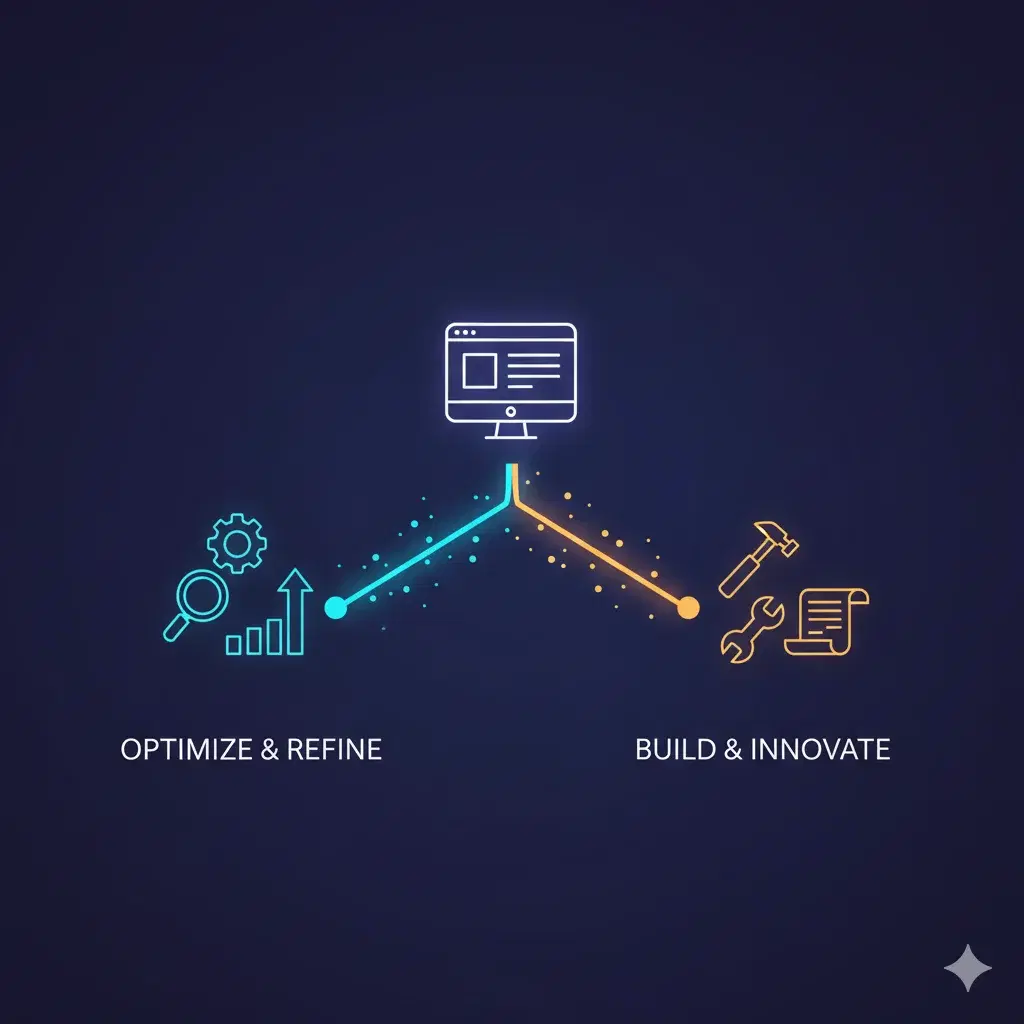
In 2026, your website is a central part of your business infrastructure. It is not just a marketing tool — it supports credibility, lead generation, customer experience, sales processes, and even internal operations. Because of this, deciding whether to rebuild your website or optimize the existing one is a strategic decision that affects performance, scalability, security, cost efficiency, and long-term growth. The right choice depends on your current technical foundation, business goals, and future plans.
When Optimization Is the Right Choice
Website optimization means improving the existing site without changing its core structure. This can include improving page speed, updating content, strengthening SEO, enhancing user experience, fixing technical errors, improving mobile responsiveness, and increasing conversion rates. Optimization works best when the underlying system is stable, modern, and capable of supporting improvements. If the architecture is sound and the platform is secure and maintainable, targeted enhancements can significantly improve performance without requiring a full rebuild. In many cases, businesses see measurable results simply by refining content strategy, clarifying messaging, improving design elements, and removing technical inefficiencies.
Optimization is usually the right choice when performance issues are minor and the foundation is strong. For example, if slow loading times are caused by uncompressed images or outdated plugins, or if conversions are low due to unclear calls to action, these problems can often be solved through structured improvements. If the website still reflects your brand accurately and supports your current business model, rebuilding may not be necessary. Optimization allows incremental progress with lower cost and minimal disruption, making it ideal when budget or timeline constraints are important.
When Rebuilding Becomes Necessary
However, there are situations where optimization is no longer sufficient. Rebuilding a website means creating a new foundation from the ground up, including updated architecture, modern frameworks, improved backend structure, redesigned user experience, and potentially new integrations. A rebuild is not only about visual changes — it addresses structural limitations that may prevent growth. When technology becomes outdated, difficult to maintain, or incompatible with modern tools, rebuilding ensures that the system is designed for long-term scalability and performance.
Rebuilding is often the better option when the current platform is outdated or unsupported. Older systems can limit integration with modern software, restrict security updates, and reduce flexibility. If your website cannot easily connect with APIs, automation tools, analytics platforms, or new digital systems, it may be holding your business back. In such cases, continued optimization may only provide temporary improvements. A rebuild allows you to design infrastructure that supports future expansion, stronger security standards, and advanced functionality.
Strategic Alignment
Another clear indicator that rebuilding is necessary is strategic change. If your business has evolved significantly — such as offering new services, targeting a different audience, or shifting your positioning — the existing website structure may no longer align with your goals. When the digital experience no longer reflects your brand identity or value proposition, a full redesign and rebuild can realign your online presence with your current strategy. This ensures consistency across messaging, design, and functionality.
Scalability Considerations
Scalability is also an important factor. As businesses grow, websites must handle increased traffic, more complex features, and additional integrations. If your current system struggles under load or cannot easily support new functionality, rebuilding may be required to create a scalable foundation. A modern architecture designed for performance and growth reduces technical debt and prevents future limitations.
Security Factors
Security considerations also influence the decision. Outdated systems may introduce vulnerabilities or lack proper encryption, monitoring, or compliance support. While some security issues can be resolved through updates, structural weaknesses often require architectural changes. Rebuilding allows security to be integrated into the foundation rather than added later, improving long-term protection.
Cost Analysis
Cost analysis should look beyond short-term expenses. Optimization is typically less expensive upfront and can extend the life of a website. However, if repeated fixes, performance patches, and incremental updates accumulate over time, the total cost may approach or exceed the investment required for a rebuild. Rebuilding may involve higher initial costs, but it can reduce maintenance complexity and support long-term efficiency.
User Experience
The decision should also consider user experience. If your website feels outdated, difficult to navigate, or inconsistent across devices, improvements may require more than cosmetic adjustments. Modern users expect fast loading speeds, intuitive navigation, mobile optimization, and clear conversion paths. When the existing structure limits these expectations, rebuilding provides the opportunity to design a user experience aligned with current standards.
The Hybrid Approach
In many cases, a hybrid approach can also be effective. Businesses may choose to rebuild specific sections while optimizing others. For example, migrating to a new platform while preserving valuable content, or redesigning key conversion pages while keeping backend systems intact. This phased strategy reduces disruption while still improving performance and scalability.
Making the Decision
Ultimately, the decision between rebuilding and optimizing should be guided by data, strategy, and long-term vision rather than aesthetics alone. If the foundation is strong and improvements can deliver measurable results, optimization is often the most efficient path. If technology, performance, scalability, or business direction no longer align with the current system, rebuilding becomes the more strategic investment.
In 2026, your website must be secure, fast, scalable, and aligned with your business objectives. Evaluating its technical health, performance metrics, integration capabilities, and strategic fit will help you determine the right course of action. When approached thoughtfully, both optimization and rebuilding can strengthen your digital presence — the key is choosing the option that best supports sustainable growth and long-term success.
Not sure whether to rebuild or optimize? Contact VLO Labs for a strategic website assessment tailored to your business goals.